
Guides, Pelican Auto Care at 31465
Brake warning signs worth acting on
Brake wear usually gives notice. Hydraulic faults do not always. The trouble is that the warnings all sound like each other until you know which is which.
The short answer
What are the signs that your brakes need repair?
Five, and they do not all carry the same urgency. A high squeal that keeps coming back is often the pad's metal wear indicator asking to be looked at, though brakes can also squeal from dust or moisture and go quiet again. A low grinding sound is a different message: it usually means the friction material is gone and metal is meeting metal, and the damage is now spreading to parts that a squeal alone would not have harmed. A pedal that feels soft, spongy or low is the one to treat most urgently, because it points at the hydraulic side, air in the system, a fluid leak or a failing master cylinder, and that affects the ability to apply the brakes at all. Vibration felt only while braking usually points at the rotors. A brake warning light can mean low fluid, a detected fault, or simply an engaged parking brake, and two of those three are reasons to stop and check.
Brakes are a wear item that tells you so
Friction material is designed to be consumed. That is the whole principle: a pad presses against a rotor, the pad gives up a little of itself each time, and the vehicle slows. Nobody has done anything wrong when brakes wear out, and wear is designed to make itself heard well before the pads are finished.
That is true of wear. It is not a promise about the hydraulic side of the system, which can fail with much less notice, so the two are described separately below.
The five sections that follow are five distinct complaints. It is worth being able to tell them apart, because they have different causes and very different levels of urgency. Two of them are reasons to stop driving: a grinding noise, and a pedal that has gone soft or sinks.
A high squeal that keeps coming back
Many brake pads have a small metal tab set into them at a fixed depth. When the friction material wears down past that depth, the tab starts touching the rotor, and the noise it makes is deliberately unpleasant. It is a mechanical alarm, and it is meant to be annoying enough that you act on it.
Not every squeal is that. Brakes squeal after rain, after sitting overnight, from dust in the mechanism, and sometimes from the specific combination of pad and rotor on a given vehicle. The distinction that matters is persistence. A noise that appears on the first few stops and then goes is usually nothing. One that has become part of how the car sounds should be looked at.
A low grinding sound
Grinding is not a louder squeal. It is a different noise with a different meaning, and the usual meaning is that the friction material has gone and the pad's backing plate is now bearing against the rotor. Steel against cast iron.
Two things follow. Braking performance is compromised, because the materials in contact were never intended to do that job. And the rotor is being cut into with every stop, which turns a straightforward pad replacement into a larger one, and the longer it continues the larger it gets.
Both of those are reasons to stop driving on it. The vehicle is not stopping as well as it should, and every further mile is also making the repair bigger. Have it brought in instead of driving it in.
A pedal that feels soft, spongy or low
Pads and rotors are the mechanical half of the system. The hydraulic half is what carries your foot's effort to them, and it depends on brake fluid, which does not compress. A pedal that travels further than it used to, or feels soft underfoot, or slowly sinks while you hold it at a light, suggests something in that hydraulic half is not right.
The usual candidates are air that has got into the lines, a leak somewhere in the system, or a master cylinder that is no longer sealing internally. Brake fluid also absorbs moisture from the air over time, which lowers its boiling point and can produce a soft pedal after heavy or repeated braking.
This is the symptom to treat most urgently. Worn pads reduce how well a vehicle stops. A hydraulic fault can affect whether it stops. If the pedal sinks, feels spongy, or goes near the floor, do not drive the vehicle. Arrange to have it brought in.
Vibration, and pulling to one side
A shudder through the pedal or the car when you brake, which is not there the rest of the time, usually comes down to the rotors no longer being uniform. Heat is normally the cause. Hard use or a long descent can leave uneven deposits of pad material on the rotor face, or distort it, and the pad then rides over a surface that varies as the wheel turns.
Pulling to one side under braking points at one corner behaving differently from the other: a caliper that is sticking rather than releasing cleanly, a collapsed flexible hose, or contaminated friction material on one side.
The important distinction with both symptoms is when they happen. If the vibration or the pulling is present while driving normally and not only under braking, the cause is somewhere else entirely and the vehicle needs to go on a ramp so somebody can see it instead of reasoning about it.
A warning light on the dashboard
Most vehicles have two relevant lights. One relates to the base braking system and commonly indicates low fluid, a detected fault, or a parking brake that is still applied. The other relates to the anti-lock system, and when it is lit the anti-lock function is typically disabled while ordinary braking continues to work.
Check the parking brake first, because it is free and it is sometimes the answer. If the light stays on with it fully released, the car is reporting something it has detected, and the sensible next step is to have the code read instead of waiting to see.
Where to get brakes looked at
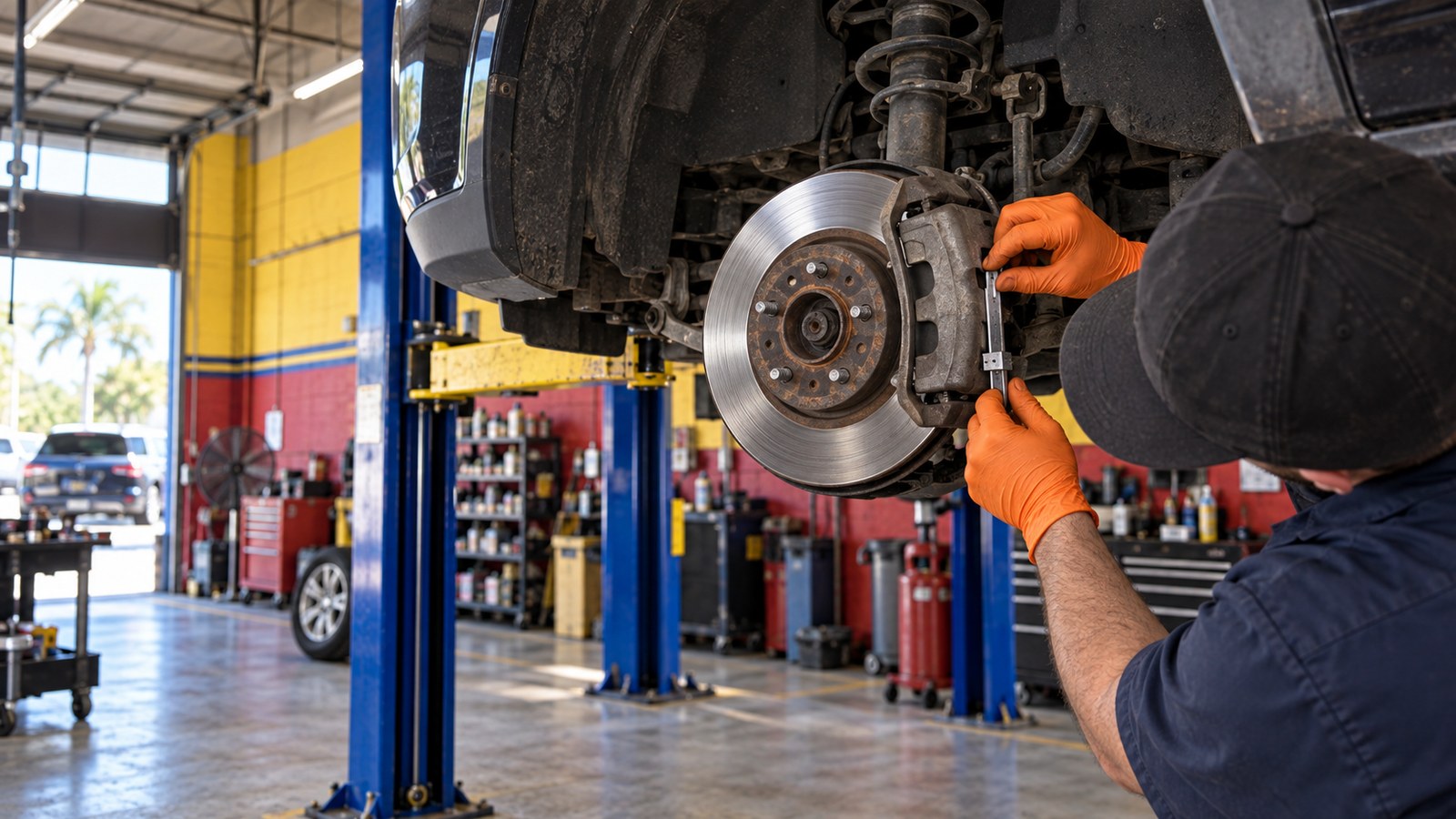
Brake work is done at Pelican Auto Care, 31465 US Highway 19 N, Palm Harbor, FL 34684, next door to the car wash on US Highway 19. The vehicle goes on the ramp and the wheels come off first, so what gets quoted is what was actually seen.
More on the service itself is on the brake repair page. If a dashboard light is the reason you are reading this, the diagnostics page covers having codes read, and preventive maintenance covers the checks that catch this sort of thing before it becomes a noise.
Frequently asked questions
Is squealing always serious?
Not always, but it is always worth understanding. Many pads carry a small metal wear indicator designed to squeal when the friction material gets low, so a squeal that appears and stays is often the pad asking to be looked at. Brakes can also squeal from dust or moisture and go quiet again.
What does grinding mean?
Grinding is a different message from squealing. It usually means metal is contacting metal, which means the friction material is gone. At that point the damage is spreading to parts that squealing alone would not have harmed, so it should not be driven on.
Why does my brake pedal feel soft?
A pedal that sinks or feels spongy points at the hydraulic side, not the pads: air in the system, a fluid leak, or a failing master cylinder. Because it affects the system's ability to apply the brakes at all, it is the symptom on this page that should be treated most urgently.
Is a shudder when braking a brake problem?
A vibration felt specifically while braking, and only while braking, usually comes from the brake rotors having lost their even surface. A vibration that is there all the time is a different question and needs the vehicle inspected on a ramp.
Should I be worried about a brake warning light?
Yes, promptly. Depending on the vehicle it can indicate low brake fluid, a fault detected in the system, or simply an engaged parking brake. Two of those three are reasons to stop and check instead of continuing.
Have the brakes inspected at 31465
Pelican Auto Care, 31465 US Highway 19 N, Palm Harbor, next door to the car wash on US Highway 19.